


Analysis Area: 16 districts and counties of Busan Metropolitan City, and elementary, middle, high, and vocational high schools under the Busan Office of Education
Core Areas: AI, Digital Education, Marine AI, Vocational High Schools, Teacher Competencies, Inter-school Gaps, Employment in Local Industries, Talent Retention
Agenda: Is Busan's AI, marine, and vocational education leading beyond facilities and programs to student competencies, employment in local industries, long-term retention, and retention in Busan?
Golden Time Type: Education AX Opportunity + Regional Talent Conversion Risk
Assessment Current Period: 2026–2029
Reference Date: August 28, 2026
Version: Regional AX Golden Time Intelligence v3.2
Final Assessment of Enhancement Criteria: Expansion of AI education infrastructure, existence of connection to vocational education, Marine AI and long-term talent retention unverified
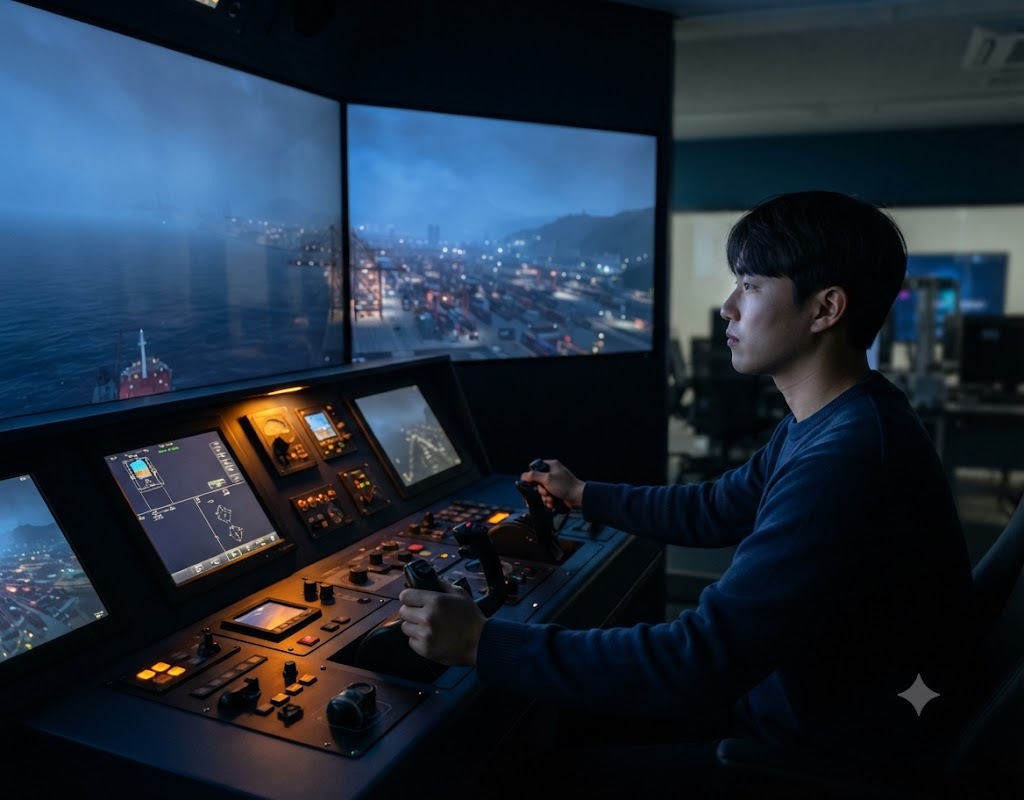
The Busan Office of Education opened a SW & AI Education Hub Center on the site of the former Deokcheon Girls' Middle School, featuring a four-story structure with a total floor area of 7,225 square meters , and is currently operating a Metaverse Lab, an XR space, and digital education facilities. In 2026, it expanded the Leading Schools for AI & Digital Utilization, the Busan Education AI Tutor BeAT, and the all-school integrated login system PENZ. Starting in September 2026, a foundation was also established to allow students from the first grade of elementary school to the third grade of high school to use educational cloud and AI services with a single account. ( Busan Office of Education SW & AI Education Hub Center , PENZ )
An infrastructure for vocational education also exists. Busan operates 38 vocational high schools, including 4 Meister High Schools and 32 specialized high schools. The employment rate of 2024 graduates within the city was **57.6%**, ranking 5th nationwide. This represents a 0.8 percentage point increase from the previous year's 56.8%. This serves as evidence that vocational education contributes to the workforce supply for local industries. ( Busan Office of Education )
However, 57.6% represents the employment rate in Busan and does not correspond to the employment rates for roles in marine, AI, semiconductor, finance, and smart logistics. The industry, job function, wages, company size, and three-year tenure rate of employed individuals are not correlated with the publicly disclosed performance results. A gap remains between local employment and the retention of talent for future industries.
Marine AI education has entered the policy agenda with plans to establish a Marine AI Education Center by 2026 and marine and physical AI camps linking elementary, middle, and high schools. However, the education center is still in the planning stage, and the achievement levels of students in marine data analysis, autonomous navigation, and smart ship projects, as well as employment outcomes at local marine companies, have not been verified. ( Busan Office of Education , Busan Metropolitan Council )
If school curricula remain limited to experiences, camps, and facility usage while technologies and job roles in the Busan Port, marine AI, fintech, and power semiconductor industries are rapidly defined between 2026 and 2029, students will not acquire the capacity to solve problems in Busan's industries even if they use AI. Although Busan education possesses an AI education infrastructure and a vocational education system, it has not yet reached a final determination that it is actually preparing talent for marine, AI, and future industries.
The Busan Office of Education operates SW·AI Education Hub Centers, AI·Digital Utilization Leading Schools, AI Tutor BeAT, PENZ integrated accounts, and teacher training. The structure is expanding AI education from a few clubs and specific schools into a common infrastructure accessible to all schools.
However, no publicly available data comparing AI class hours, student project levels, teacher guidance capabilities, and generative AI utilization skills by school using the same criteria has been found. Differences in infrastructure accessibility and student capabilities are not distinguished.
If only account and platform usage increase over the next two to three years, the use of AI may spread, but gaps between schools in problem definition, data analysis, and model validation capabilities will remain. In Busan education, the foundation for AI access has expanded, but the foundation for student competencies remains unassessed.
In 2026, the Busan Office of Education established an environment for integrated login and paid AI services across all schools, and created a structure where students and teachers use the same account for an extended period. Access to AI tools shifted from a structure dependent on individual accounts and household payment capabilities to a common infrastructure provided by the Office of Education.
However, using AI services is not the same as collecting and validating data or determining the errors, biases, and limitations of models. Common attainment measuring individual students' prompt completion, data analysis, algorithm understanding, and result verification abilities has not been confirmed.
As the use of generative AI becomes more widespread between 2026 and 2029, the gap widens where students without verification capabilities consume results while those with verification capabilities control them. Although AI education in Busan has entered the tool utilization stage, the universalization of AI judgment capabilities has not been confirmed.
Busan's future industries are expanding to include port automation, autonomous ships, marine satellites, fintech, power semiconductors, biotechnology, and age technology. Although individual technologies differ, data interpretation, AI utilization, sensors, software, safety, and ethics have emerged as common job foundations.
The unit of vocational education has also shifted from single skills and certifications to complex system operation and problem-solving projects. Even for majors in mechanical, electrical, marine, and logistics, operating with AI and data separated widens the gap with actual industrial job duties.
Data comparing AI convergence hours by department, joint industry projects, and individual student field portfolios at vocational high schools in Busan is unavailable. Over the next two to three years, if the industry hires for convergence roles while schools produce graduates based on traditional departments, employment rates and job suitability will become separated.
The gap in talent education for Busan's future industries lies not in the absence of majors, but in the lack of visible integration between existing majors and AI.
Busan's future industries are expanding to include port automation, autonomous ships, marine satellites, fintech, power semiconductors, biotechnology, and age technology. Although individual technologies differ, data interpretation, AI utilization, sensors, software, safety, and ethics have emerged as common job foundations.
The unit of vocational education has also shifted from single skills and certifications to complex system operation and problem-solving projects. Even for majors in mechanical, electrical, marine, and logistics, operating with AI and data separated widens the gap with actual industrial job duties.
Data comparing AI convergence hours by department, joint industry projects, and individual student field portfolios at vocational high schools in Busan is unavailable. Over the next two to three years, if the industry hires for convergence roles while schools produce graduates based on traditional departments, employment rates and job suitability will become separated.
The gap in talent education for Busan's future industries lies not in the absence of majors, but in the lack of visible integration between existing majors and AI.
The Busan Office of Education included the establishment of a Marine AI Education Center to experience marine science and industry in its 2026 educational direction, and in August 2026, operated a Marine and Physical AI Camp linked with elementary, middle, and high schools. Evidence is confirmed of an attempt to connect the industrial assets of a maritime city to educational themes.
However, the Marine AI Education Center is still in the planning stage rather than demonstrating operational performance, and the number of camp participants, project results, competency changes, and follow-up career paths are not disclosed. There is a gap between experiential education and the regular curriculum, as well as between career paths and employment.
If marine AI remains confined to camps and facility experiences for two to three years, students will experience the ocean and AI separately, but will not develop the cumulative capability to handle data regarding ships, ports, and the marine environment. Although marine AI education in Busan has emerged as an agenda item, it remains unestablished in terms of curriculum and talent development systems.
In 2024, the proportion of local employment for graduates of vocational high schools in Busan was 57.6%, ranking fifth nationwide, and in 2025, the Office of Education expanded the operation of vocational high schools linked to national and regional core industries from four to five schools. The degree to which vocational high schools are connected to local industries is confirmed to be at a certain level.
However, the match rate between the industry, job function, wages, and employment type of companies within the jurisdiction and the graduates' majors is not disclosed. Even if graduates are employed in the region, if they are placed in simple production or service roles, it is distinguished from the training of personnel for future industries.
If entry-level repetitive tasks decrease due to automation between 2026 and 2029, job sustainability may weaken even if current local employment rates are maintained. While Busan vocational high schools have connections to local employment, their connection to future industry jobs remains unconfirmed.
Busan operates four Meister High Schools, including Busan SW Meister High School, Busan Automotive Meister High School, Busan Mechanical Engineering High School, and Busan Maritime High School, as well as 32 specialized high schools. In 2026, employment competency enhancement was conducted for 38 vocational high schools under the theme of fostering AI convergence technology talents.
While industries are shifting toward roles that transcend academic boundaries, such as autonomous navigation, smart ports, power semiconductors, and AI finance, school system reorganization proceeds slowly due to the accompanying processes of department approval, faculty placement, and equipment changes. There is a time lag between the technology cycle of industries and the curriculum reorganization cycle.
Public data tracking the gap between graduate demand forecasts and actual hiring by department, as well as the performance of abolished or reorganized departments, is limited. As a time lag of two to three years accumulates, the equipment and skills acquired in school fall behind corporate hiring standards by the time of graduation.
While Busan's vocational education has recognized future industries, there is no evidence that the pace of curriculum change matches industrial changes.
The SW·AI Education Hub Center is equipped with a 7,225㎡ facility and a metaverse, XR, and AI educational environment, and AI tutors and digital platforms have been expanded to school sites. Access to AI facilities and services in Busan education has rapidly improved.
However, outcome evidence comparing changes in students' information subject achievement, data literacy, project completion, and career choices before and after facility use has not been confirmed. The connection between the frequency of use and the improvement of competencies has not been disclosed.
Although facility maintenance and content replacement costs will continue to be incurred from 2026 to 2029, it is impossible to determine whether the program has actually narrowed the gap unless student reach is measured. In the case of AI education in Busan, the input has been verified, but the student outcome remains unconfirmed.
The Busan Office of Education possesses a dedicated AI department, an educational research and information institute, SW/AI education hub centers, leading schools, an integrated account, and a teacher training system. The organization and platform to operate AI education have been established.
However, there is no open system linking a common baseline of student competencies, AI education hours by school, teaching execution levels by teacher, and participation in local industry projects. The Busan City Council has also raised concerns regarding the lack of a control tower for AI education projects and the potential for overlap among institutions.
Over the next two to three years, as projects expand across institutions, the disparity will widen, with multiple programs concentrated in the same school while other schools remain merely for experiential opportunities. Although Busan Education has established the organization and projects, the performance evaluation framework for the overall system is not yet formed.
Leading Schools for AI and Digital Utilization, Busan Future Schools, AI Tutor BeAT, and PENZ are structured to expand the scope of AI education to all schools. In 2026, supplementary information education materials for elementary schools were also distributed for teachers and students.
However, the actual adoption rate of leading schools' instructional models in general schools, teacher training completion rates by school, and student usage and reach are not verified. The dissemination of platforms and the diffusion of instructional innovation are not distinguished.
If the gap in project experience between leading schools and regular schools accumulates over two to three years, students' AI capabilities will vary depending on the school, even if they share common accounts. In Busan's AI education, access to technology is in the full-scale diffusion stage, but the diffusion of class quality remains unassessed.
In 2026, the Busan Office of Education monitored 56 schools targeted for intensive study, including small schools in the old city center and West Busan, and on-site findings confirmed shortages of teachers, educational welfare workers, and counselors, as well as limitations in operating experiential activities. This is evidence that the educational gap between regions stems from manpower and program implementation capabilities rather than facilities.
AI education is structured such that the depth of instruction varies depending on teacher competence, external experts, and home environments. Even if the same platform is distributed, if teachers are unable to design projects, the students' experience remains limited to simple usage.
If the manpower shortage in schools in West Busan and the old city center persists for two to three years, high-difficulty projects such as marine and physical AI will be concentrated in only a few schools. There is no evidence to conclude that the spread of AI in Busan education has narrowed the gap between regions, and the risk of creating a new competency gap remains.
12-1. Buk-gu SW·AI Education Hub Center — Separation of Facilities and Student Outcomes
The SW·AI Education Hub Center, established on the site of the former Deokcheon Girls' Middle School in Buk-gu, spans 7,225 square meters and is equipped with a Metaverse Lab, XR, and digital education spaces. A hub is now in actual operation, enabling Busan students to access an advanced AI education environment even outside of school.
However, the number of users by region and school, repeat participation rates, project completeness, and changes in college admission and career paths are not disclosed in an integrated manner. A gap remains between the accessibility of hub facilities and educational outcomes.
If the proportion of short-term experiences is high for 2 to 3 years and participation in repetitive projects is restricted, large facilities become fixed as visiting-type educational spaces. The Buk-gu SW·AI Education Hub Center has been identified as an infrastructure hub, but it has not yet been determined as a hub for accumulating student capabilities.
12-2. 38 Vocational High Schools in Busan — Separation of Local Employment and Long-term Settlement
The 38 vocational high schools in Busan recorded a local employment rate of 57.6% for 2024 graduates and have set the cultivation of AI convergence technology talent as a vocational education agenda for 2026. Employment pathways connecting schools to local companies exist to a certain extent.
However, the 1- and 3-year retention rates, wage increases, alignment with majors, and the proportion of jobs in future industries among employed workers in the district are not confirmed. Local retention at the time of employment and long-term career settlement are separated.
If entry-level field jobs become automated within two to three years and upward career paths for graduates are not established, the turnover and transfers of employees within the district will increase. While Busan vocational high schools have strong local connections for initial employment, the long-term retention of talent remains unconfirmed.
The Busan Office of Education is operating intensive training on AI and digital teaching competencies for experienced teachers, and has also organized AI and information education courses at the Teacher Training Information Center. Teacher training is expanding from the use of basic tools to their application in subject classes.
However, data measuring the number of AI class implementations per teacher, student project guidance capabilities, and the attainment of data, ethics, and verification education are not available. The connection between training completion and actual changes in classes is also not disclosed.
As AI tools and curricula change rapidly over the next two to three years, knowledge from one-time training will quickly become outdated, and the availability of in-house specialist teachers at each school will determine student experience. While the foundation for AI training for teachers in Busan exists, their implementation capabilities at the classroom level remain unassessed.
In 2026, Busan expanded AI integrated accounts and leading schools and promoted the establishment of a Marine AI Education Center. During the same period, technologies and hiring standards for the Busan Port automation, autonomous ship AI data platforms, fintech, and power semiconductor industries were rapidly finalized by 2029.
However, there is no evidence linking schools' AI proficiency with job demands in future industries. There is a gap between the time students graduate and the time it takes for industry technology standards to become entrenched.
If middle school students in 2026 lack AI fundamentals and experience in industrial projects while entering high school, college, and the job market, subsequent retraining costs and the entry gap will widen. Companies will also hire experienced personnel from outside if they do not trust the capabilities of local education.
The irreversibility of Busan's education lies not in the delay in introducing facilities, but in the fact that a generation of students completes their competencies only after passing through the initial job market of the industrial transition.
AX Response System | Connection Evidence | Judgment function | 2026–2029 Assessment Criteria |
| Student Future Intelligence Graph | Students · Classes · Projects · Career · Employment · Longevity | Long-term connection between education and industrial performance | 1, 3, and 5 years of local retention after graduation |
| AI Competency Runtime | Utilization · Data · Model · Validation · Ethics | Separation of tool usage and AI judgment capabilities | Common attainment by school level |
| Ocean AI Learning Twin | Marine Issues · Data · Projects · Companies · Jobs | Connecting marine experiences with industrial capabilities | Marine AI Project · Certified Student |
| Vocational Skill-to-Job Ledger | Department · NCS · AI Convergence · Company · Job · Salary | Assessment of actual job suitability in vocational education | Employment rate for majors and future jobs |
| Teacher Execution Monitor | Training, Classes, Projects, Student Outcomes | Verification of classroom conversion in teacher training | AI class implementation rate after training |
| School Diffusion Graph | Leading schools · Regular schools · Teachers · Students · Region | Tracking Spread and Disparities Between Schools | Dispersion of reach by school |
| Industry Curriculum Signal | Industrial Technology · Job Openings · Job Duties · Curriculum | Detecting Industrial Change and Educational Time Lag | New job reflection period |
| Golden Time Dashboard | Infrastructure, Capabilities, Disparities, Employment, Retention | Calculation of Future Industry Talent Preparedness Grades | Introduction, diffusion, connection, and irreversible stages |
AX Response Assessment: If the number of AI usage and programs per school is not linked to student competencies, industry projects, job roles, and tenure, Busan education's readiness for future industries is overestimated based on facilities and employment rates.
Current Assessment: Expansion of AI education infrastructure · Connection to vocational education · Marine AI and long-term talent retention unverified
2-Year Assessment: The interval determining whether AI education shifts from experiential learning to common student competencies.
3-Year Assessment: The period where the time lag between industrial hiring standards and the school curriculum can become entrenched as a gap in graduate competitiveness.
Student Assessment: Access to AI services has expanded, but data, model, and validation capabilities remain unassessed
Vocational Education Assessment: The proportion of local employment is high, but future industry job functions and long-term employment are unconfirmed.
Gap Assessment: Despite the expansion of the platform across all schools, gaps in class quality remain across schools, regions, and teachers.
Determination of Irreversibility: Rapid increase in re-entry costs after a generation of students misses the early industry hiring market
Overall Assessment: Busan education has started teaching future industries, but there is still insufficient evidence to conclude that it is producing talent for these industries.
- Actual Class Hours for AI and Information Education by School Level
- AI service usage and repeat usage rates by student
- Reach of data literacy, model understanding, and result validation
- Generative AI ethics, copyright, and bias detection capabilities
- Number and completeness of AI projects by school
- Adoption rate of the leading school model in general schools
- Student AI Competency Gap by District/County
- Number of teachers and professional staff at schools concentrated in the Old City Center and West Busan
- Teacher AI Training Completion and Class Implementation Rate
- SW·AI Education Hub Center Usage by School
- Repeated participation in hub centers and changes in student career paths
- Marine AI Education Center Process, Opening, and Curriculum
- Student Outcomes and Follow-up Activities of the Marine & Physical AI Camp
- Busan Sat, Port, and Ship Data Utilization Project
- AI Convergence Class Hours by Department in Vocational High Schools
- Local employment rate of vocational high school graduates
- Major-Job Match Rate and Regular Employee Ratio
- Employees in future industry jobs and median wages
- 1- and 3-year retention rates after employment within the district
- Out-of-region transfer rate of vocational high school graduates
- Busan corporate field training and joint education participation rate
- Hiring conversion rate for industrial projects
- Repeat operation rate of joint courses between universities, companies, and schools
- Employment rate of local graduates relative to investment in Busan's future industries
Marine AI camps, AI convergence vocational education, and future industry experiences bring the name of the industry into the school. However, if students analyze actual marine and port data and companies do not evaluate the results, the industry name and industrial capability become separated.
The 57.6% local employment rate for vocational high schools also shares the same boundary. While the fact that one is employed in Busan demonstrates regional connectivity, it does not show whether the job is maintained after automation or whether wages and skills increase.
The connection between education and local industries is established not at the end of classes, but at the point where local companies purchase the competencies of graduates. If corporate projects, field training, hiring, and long-term employment are not linked, schools' education for future industries remains merely a career experience.
The readiness of Busan's education for future industries is judged not by the number of marine and AI programs, but by the specific job roles and wages at which Busan companies repeatedly hire graduates who have received that education.
Judgment point | Confirmed Evidence | Risk level | verdict |
| 2023~2024 | Operation of AI Leading Schools, Opening of SW/AI Education Hub Center, 57.6% Employment within the District | caution | Securing AI-based and local employment pathways |
| 2025 | Support for 38 vocational high schools, increase in schools linked to key regional industries from 4 to 5 | Caution~Alert | Expansion of vocational education linkages, long-term outcomes unconfirmed |
| 2026 | Promotion of introduction across all PENZ schools, expansion of BeAT, and establishment of a marine AI education center | boundary | Increased accessibility, student reach not determined |
| 2027 | Verification section for school expansion of marine AI and vocational education courses | boundary | The divergence between experience and formal education |
| 2028 | Section where industry project and graduate recruitment outcomes become visible | Boundary~Critical | Determination of future job transition |
| 2029 | Confirmation of alignment between Busan's future industry recruitment standards and graduate competencies | Critically possible | The success and failure of the local talent supply system |
